
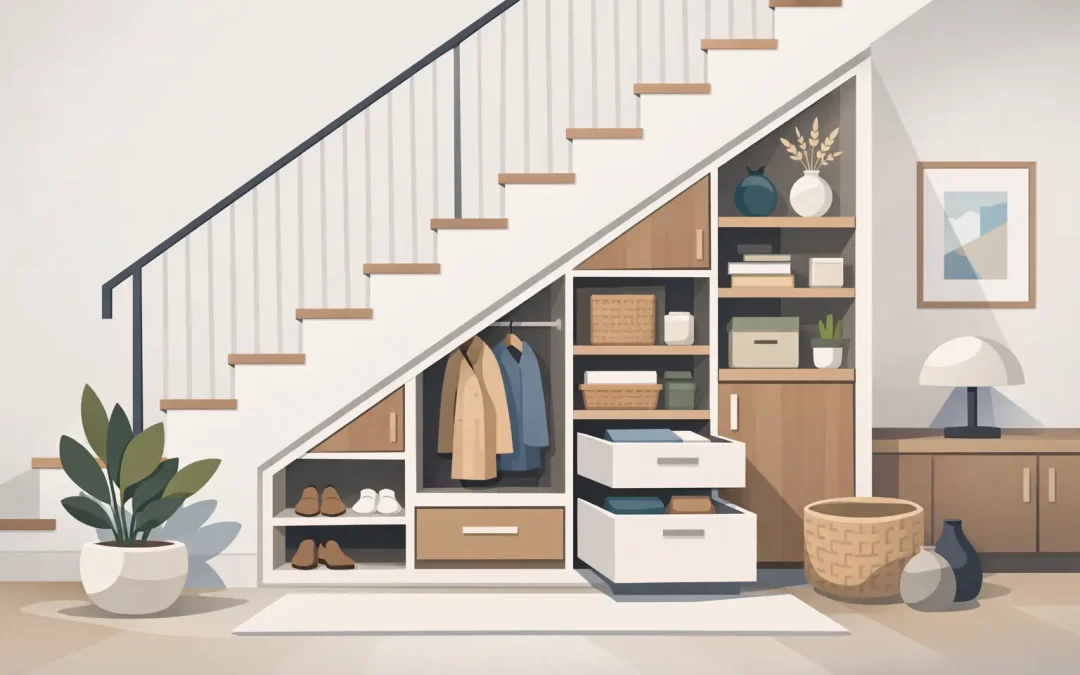
That triangular void under the staircase is often one of the most wasted areas in the home. With well-designed under stairs storage cabinets, it can become one of the hardest-working spaces instead – keeping clutter out of sight while adding storage that actually suits the way your household lives.
For many Melbourne homes, especially where floor space matters, the area under the stairs is too valuable to ignore. The right cabinetry can turn it into a place for shoes, school bags, cleaning supplies, pantry overflow, wine storage, pet items or even a compact study nook. The key is not just filling the gap, but designing cabinetry that fits the structure, the room around it and the way you want to use it every day.
Why under stairs storage cabinets are worth doing properly
Under-stair spaces rarely suit off-the-shelf storage. The angles are awkward, depths vary, and access points can quickly become frustrating if the layout has not been thought through. A cabinet that looks good on paper can be difficult to open fully, too shallow to be useful or leave dead space hidden behind fixed panels.
That is why custom joinery makes such a difference here. Good design takes into account the stair pitch, ceiling clearance, surrounding walls and traffic flow through the room. It also considers what you need to store now, not just what might fit in theory.
Done properly, under stairs storage cabinets can improve more than storage capacity. They can make an entryway feel calmer, help an open-plan living area stay tidier, and create a more finished look throughout the home. In renovation projects, they are often one of those additions that clients appreciate more over time because they solve day-to-day frustrations.
The best uses for under stairs storage cabinets
The most effective solution depends on where the staircase sits in the home. If it is near the front door, the cabinetry often works best as an entry storage zone. That might include drawers for shoes, tall cupboards for coats, and overhead sections for less-used items. If the stairs connect to a living area, the cabinetry may be better used for general household storage, concealed display, or media-related items.
In homes where the staircase sits close to the kitchen, under stairs storage cabinets can take pressure off pantry space. Deep drawers are especially useful here because they bring contents forward rather than forcing you to reach into the back of a dark cupboard. In compact homes or townhouses, this can make a real difference to how functional the kitchen feels.
There are also situations where a mixed-use design works best. One section may be dedicated to everyday items, while another holds cleaning equipment, seasonal pieces or even integrated wine storage. The benefit of custom work is that the cabinetry can be divided according to practical needs rather than a standard internal fit-out.
Drawers, doors or pull-out systems?
This is where design choices matter. Hinged doors can work well in taller sections with easy access, especially when you need room for bulky items like vacuums or sporting gear. Drawers are often the most user-friendly option in lower areas because they make the full depth of the cabinet accessible. Pull-out systems can also be effective where the footprint is narrow and long.
There is no single answer for every staircase. A combination is often the best result. The lowest part of the stair void may suit shallow drawers, while the taller end can accommodate full-height cupboard space. The goal is to match the storage method to the shape of the space rather than forcing one cabinet style across the entire run.
What to consider before you build
The first question is what the cabinetry needs to do. Storage works best when it has a clear purpose. If everything is meant to go under the stairs, the area can quickly become a hidden dumping zone. If each section has a role, the result is easier to use and easier to keep tidy.
Access is the next major factor. Cabinet doors and drawers need clearance to open comfortably without interrupting the way people move through the home. This matters even more in hallways and entry points where traffic can be tight. A smart layout should feel natural to use, not like a workaround.
Materials and finishes also deserve attention. Under stairs storage cabinets should feel connected to the rest of the interior, especially in visible areas. Matching or complementing nearby kitchen, laundry or living room cabinetry can help create a cohesive result. For some homes, a clean modern finish works best. In others, warmer textures or more classic detailing will sit better with the existing style.
Lighting can be worth considering too. If the cabinetry includes a display section, a study nook or a bar area, integrated lighting can lift both function and appearance. For purely practical storage, it may not be necessary, but in darker corners of the home it can still improve usability.
The trade-off between open shelving and closed cabinetry
Some homeowners like the look of open shelves under the stairs, particularly for styling books, decorative pieces or baskets. That can work well in a living area where appearance is part of the goal. The trade-off is maintenance. Open storage tends to collect dust and can quickly look cluttered if not kept neat.
Closed cabinetry is usually the more practical choice for busy households. It hides visual mess, protects contents and gives the space a cleaner finish. If you want a balance of both, a small open niche within mostly closed cabinetry can be a sensible compromise.
Why custom design matters in Melbourne homes
No two staircases are exactly the same, and that is especially true across Melbourne homes where layouts range from newer townhouses to larger family homes and renovated older properties. Ceiling heights, wall alignment, stair construction and room proportions all affect what is possible.
A custom approach also allows the cabinetry to work as part of a bigger design plan. If you are updating a kitchen, laundry or other fitted storage in the home, under stairs cabinetry can be designed to complement those spaces rather than feeling like a separate add-on. This creates a more consistent finish and often delivers better overall value from the renovation.
For homeowners who care about both presentation and practicality, quality workmanship is not a small detail. Tight lines, durable materials, reliable hardware and well-considered internal storage make a difference to how the cabinetry performs over the years. Under-stair areas can be awkward to build around, so precision matters.
Under stairs storage cabinets and resale appeal
Storage is one of the first things buyers notice, even if they do not say it straight away. Homes that feel organised and thoughtfully planned often leave a stronger impression. Under stairs storage cabinets will not carry the same headline appeal as a full kitchen renovation, but they can contribute to a home feeling more complete, more functional and better resolved.
That said, resale should not be the only reason to do it. The best results come when the cabinetry is designed around your own needs first. A family with young children may value bag and shoe storage near the door. A couple who love entertaining might prefer a bar or wine cabinet. If the solution works well for your household, it is more likely to add genuine value rather than just visual appeal.
Choosing the right cabinetry team
Because under-stair projects are highly dependent on measurements and layout, experience matters. A good cabinetry team will look beyond the empty space and ask how you use the room, what needs to be stored and how the joinery should connect with surrounding finishes. That process is what turns an awkward area into something useful and well integrated.
For homeowners in Clayton and across Melbourne, it also helps to work with a team that understands whole-of-home cabinetry, not just one room in isolation. Under stairs storage often sits between spaces – near kitchens, living zones, hallways or laundries – so it benefits from a broader design perspective. That is where a custom joinery specialist such as All Quality Kitchens can bring real value, especially when the aim is to create a solution that feels built for the home rather than fitted into it.
A well-used home is never short on things to store. The advantage of under-stair cabinetry is that it makes use of space you already have, in a way that can look polished and feel effortless when it is done properly. If that area under your stairs has been sitting empty or underperforming, it may be one of the smartest places in the house to improve next.
Recent Comments