
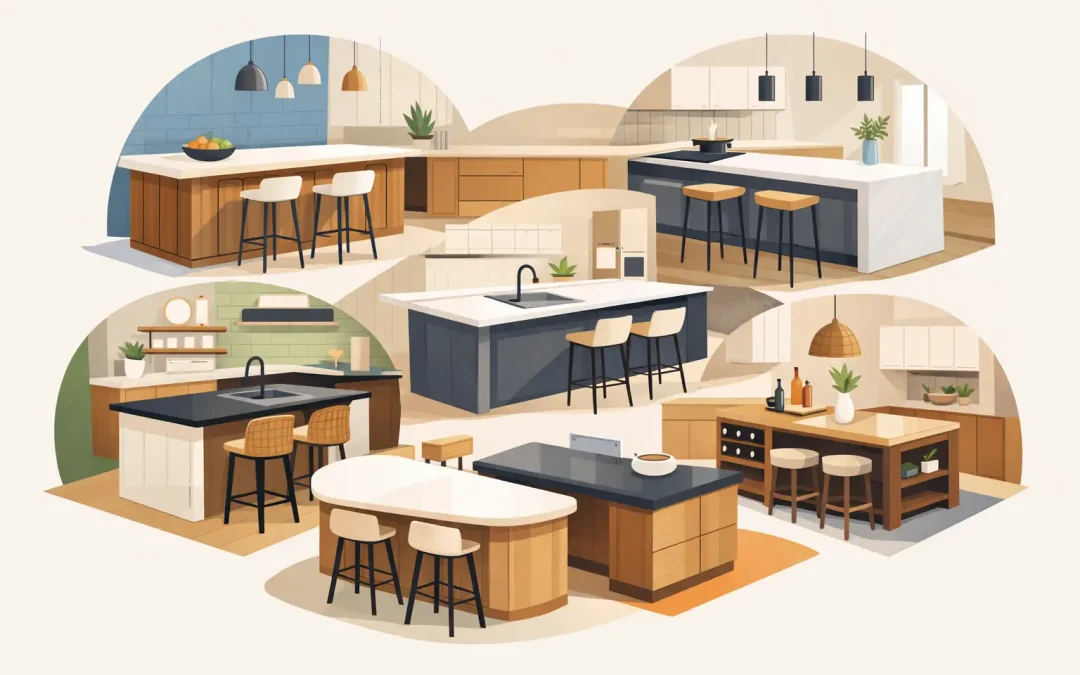
The best kitchen island bench ideas start with one simple question – how do you actually use your kitchen? For some Melbourne households, the island is where breakfast happens, homework gets done and friends gather with a drink. For others, it needs to carry the hard work of prep, storage and appliances without making the room feel crowded. A good island bench is not just a centrepiece. It needs to earn its place.
In custom kitchen design, the right island can improve movement, increase storage and make the whole room feel more resolved. The wrong one can do the opposite. It can block walkways, create awkward corners and take up space better used elsewhere. That is why the most successful island benches are designed around the home, not copied from a showroom photo.
Kitchen island bench ideas that suit real homes
There is no single island bench that works for every layout. A wide open-plan home can handle a large statement island with seating on two sides, while a smaller suburban kitchen may need a slimmer bench with storage only. The size of the room, the position of doors and windows, and the way the household lives all matter.
For many families, a multi-purpose island is the best place to start. This might include deep drawers on the kitchen side, an overhang for stools on the living side and enough clear benchtop for serving or meal prep. It is practical, balanced and suits the way most people use a modern kitchen.
If cooking is the main priority, an island centred on preparation can make more sense. A broad, uninterrupted surface gives you room to work, especially if the sink and cooktop remain on the perimeter. This option often feels cleaner visually and keeps the island flexible for entertaining as well.
Start with the layout before the features
One of the most common mistakes with kitchen island bench ideas is focusing on extras too early. Seating, sinks, wine fridges and feature lighting can all be worthwhile, but the layout has to work first. You need comfortable clearance around every side, enough room to open drawers and appliances, and a shape that supports natural movement between the fridge, sink and cooking zone.
As a guide, the island should never force people to sidestep each other in a busy kitchen. If the room is tight, a narrower island or even a peninsula may be the better option. There is no value in squeezing in an island just because it is on the wish list. A custom design should improve function, not compromise it.
This is where tailored cabinetry makes a clear difference. Rather than trying to make standard modules fit, a custom island can be built to the exact proportions of the room. That allows for better storage planning, cleaner lines and a result that feels intentional.
Seating that feels comfortable, not squeezed in
Seating is one of the most requested island features, and for good reason. It creates a casual spot for meals, conversations and everyday living. But comfortable seating depends on proportion. Too little overhang and knees hit cabinetry. Too many stools and the space starts to feel cluttered.
For smaller households, seating for two or three is often enough. In larger open-plan kitchens, four seats may work well if the island length allows proper spacing. It also helps to think about who will sit there most often. Young children, teenagers and adults all use island seating differently, and stool height, legroom and surface durability should reflect that.
If the island is primarily for entertaining, a waterfall edge and clean seating face can create a polished look. If it is more of a family workhorse, easy-clean finishes and practical corners may matter more than a dramatic detail.
Storage-focused island bench ideas
Not every island needs a sink or cooktop. In many homes, the most valuable feature is storage. Deep drawers are particularly useful because they make pots, pans, containers and small appliances easier to access than standard cupboards. Internal organisers can also help keep larger drawers from becoming catch-all spaces.
A storage-focused island can hold everyday essentials close to where they are used. That may include bins, lunchbox storage, platters, mixing bowls or even a dedicated drawer for kids’ snacks. These details sound small, but they often have the biggest impact on how well a kitchen works day to day.
Open shelving can be added at the end of an island for cookbooks or display pieces, though it works best when used sparingly. Too much open storage can quickly look messy, especially in a busy family kitchen. Closed cabinetry generally offers a cleaner and more durable result.
Should your island include a sink or cooktop?
This depends on how you like to cook and entertain. An island sink can be excellent for food prep, especially if it faces the living area and lets you stay connected while working. It can also make clean-up more convenient if the dishwasher is integrated nearby. The trade-off is that sinks bring visual clutter. Drying racks, soap bottles and dirty dishes can all end up on display.
A cooktop on the island creates a social cooking zone and can look impressive in the right space. But it also requires careful planning for ventilation, safety and clear working areas. Splatter, hot surfaces and overhead rangehood design all need to be considered. In many homes, keeping the cooktop on the wall and using the island for prep and gathering offers a more flexible outcome.
There is no universal right answer here. The best choice depends on the layout, the cooking style and the level of maintenance the household is happy to manage.
Materials matter more than people think
An island bench gets used hard. Bags get dropped on it, school projects spread across it and hot dishes pass over it every day. That is why material selection matters just as much as appearance.
Engineered stone remains popular for island benchtops because it offers a clean finish and strong day-to-day performance. Porcelain is another option worth considering for homeowners wanting a refined look with good durability. Timber can bring warmth, especially in modern kitchens that need a softer touch, but it usually requires more care over time.
Cabinet finishes should also suit the level of use. Polyurethane, laminate and timber veneer each have their place depending on the design direction and budget. A calm, well-finished island can anchor the whole room, but it also needs to stand up to regular wear.
Power, lighting and the details that make it work
Some of the best kitchen island bench ideas are the least obvious at first glance. Integrated power points, for example, can make a huge difference if the island is used for laptops, small appliances or charging devices. Pop-up or discreetly placed outlets help preserve a clean look while adding real convenience.
Lighting deserves the same practical thinking. Pendant lights can define the island beautifully, but scale and placement matter. Oversized fittings in a modest kitchen can feel heavy, while lights hung too low interrupt sightlines. Good task lighting should support the way the bench is used, not just decorate it.
The ends of the island also deserve attention. A feature panel, curved edge or matching joinery detail can give the whole kitchen a more considered finish. These are the elements that separate a basic island from one that feels properly designed.
Matching the island to the rest of the home
Because many Melbourne homes now flow from kitchen to dining and living, the island bench needs to connect with more than just the kitchen cabinets. It should suit the broader style of the home, whether that is contemporary, minimalist, warm modern or something more classic.
This is especially relevant when a renovation includes cabinetry in other areas such as the laundry, bathroom or wardrobe spaces. Consistency in materials, colours and joinery details can make the whole home feel more cohesive. For homeowners planning more than one upgrade, it is worth thinking beyond the kitchen alone.
At All Quality Kitchens, that whole-of-home perspective often helps clients make better long-term design choices. The island is important, but it works best when it feels like part of a complete and carefully planned result.
The best island bench is the one built for your routine
It is easy to be drawn to large statement islands with every feature included. Sometimes that is exactly the right choice. Sometimes a simpler bench with excellent storage and better circulation will serve the household far better. The difference comes down to how the space is designed and how honestly the daily routine is considered.
If you are weighing up kitchen island bench ideas, think less about trends and more about function, proportion and finish. A well-designed island should look right in the room, feel easy to use and continue working hard years after the renovation is complete. That is usually where good design proves its value.
Recent Comments