
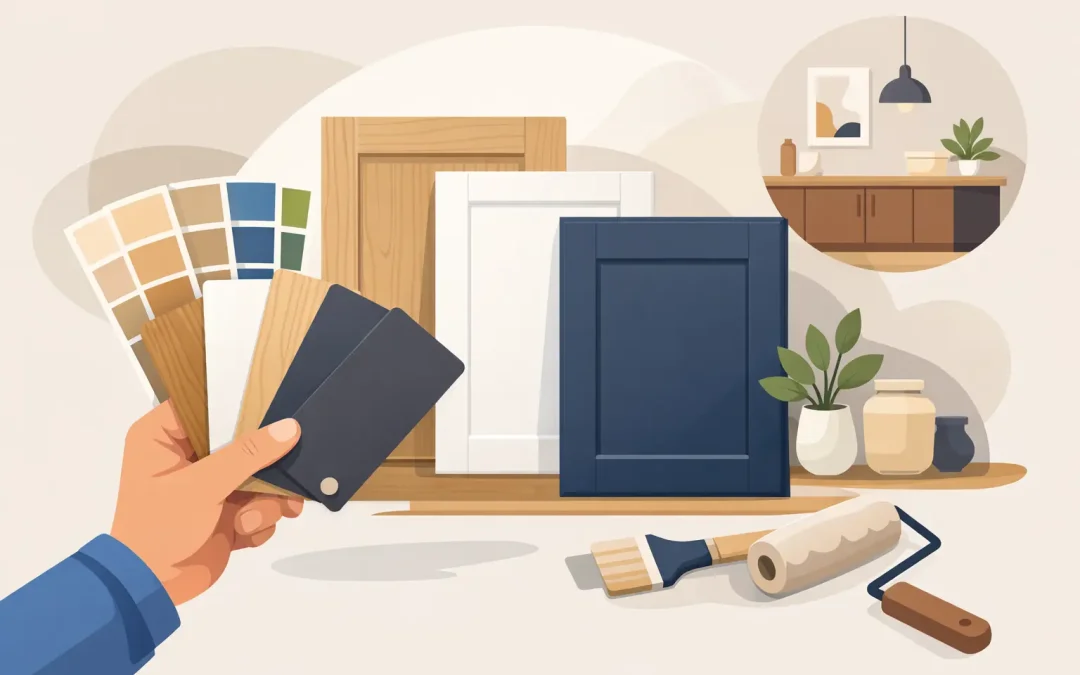
A cabinet sample can look completely different beside a sunlit Clayton window than it does under showroom lighting. That is why knowing how to choose cabinet finishes starts with more than picking a colour you like. The right finish needs to suit the way your household lives, the amount of natural light in the room, the style of your home and the level of maintenance you are comfortable with.
Cabinetry is a long-term part of a kitchen, laundry, bathroom or wardrobe. Benchtops, paint colours and furnishings can change over time, but cabinetry sets the foundation of the room. Taking a considered approach now helps create a space that feels purposeful, practical and well made for years to come.
Start with the room, not the sample
A finish should be selected in the context of the full room. Before settling on a door colour or texture, consider the room size, ceiling height, window placement, flooring, benchtop material and splashback. These elements influence whether a finish appears warm, cool, light or heavy.
In a compact kitchen or laundry, lighter cabinet finishes can help the room feel more open. Soft whites, warm greys, pale timbers and muted neutral tones reflect light well without looking stark. In a larger kitchen with good natural light, deeper colours such as charcoal, forest green, navy or rich timber tones can add welcome depth and definition.
Lighting deserves particular attention. A finish that looks crisp under cool showroom lights may appear creamy under warm pendant lights at home. View samples near the actual windows where possible, then check them in the morning, afternoon and evening with your planned artificial lighting switched on. This simple step prevents many costly colour surprises.
How to choose cabinet finishes for daily use
The most attractive finish is not always the most suitable one. A family kitchen used several times a day needs a different level of resilience from a guest powder room or a wardrobe in a low-traffic bedroom.
For busy homes, consider how readily a surface shows fingerprints, water marks, cooking residue and everyday knocks. Dark, high-gloss doors can look striking, but they tend to reveal smudges and fine marks more clearly. Very matte, dark finishes can also show handprints, particularly around frequently used drawers and integrated appliance fronts.
Textured finishes, woodgrain-look surfaces and mid-tone colours are often forgiving choices for active households. They can soften the appearance of minor marks while still delivering a modern, tailored look. Light finishes are usually easier to live with than very dark doors, although bright white may make colourful spills more noticeable in a laundry or family kitchen.
The best choice depends on your cleaning routine. If you prefer a polished, high-reflection look and do not mind regular wiping, gloss may suit your home. If you want a softer appearance with less day-to-day visual maintenance, a satin, textured or low-sheen finish can be a better fit.
Consider moisture and heat exposure
Kitchens, bathrooms and laundries all experience moisture, but not in the same way. Cabinetry close to sinks, dishwashers, cooktops and laundry troughs needs careful detailing as well as an appropriate surface finish. Quality construction, sealed edges and correct installation are every bit as important as the face of the cabinet.
In bathrooms and laundries, choose finishes that work well with humidity and can be wiped down easily. Around cooktops, think about the proximity of heat, steam and splatter. A well-planned layout can protect cabinetry by keeping vulnerable edges and finishes away from the harshest conditions.
Choose a sheen level that suits your style
Sheen changes how a colour behaves. The same white can feel clean and contemporary in gloss, understated in satin, or warm and architectural in a textured matte surface.
High-gloss finishes reflect light, which can be useful in smaller or darker kitchens. They often suit contemporary interiors and create a sleek visual effect, especially when paired with handleless cabinetry. Their trade-off is visibility: reflections, fingerprints and surface marks are generally easier to see.
Matte and low-sheen finishes have become popular in modern Melbourne homes because they offer a calm, refined appearance. They reduce glare and work particularly well with natural timbers, stone-look benchtops and feature lighting. Not all matte finishes perform alike, however, so ask about their resistance to fingerprints, marks and cleaning products before making a final selection.
Satin finishes sit between gloss and matte. They offer a subtle lustre without strong reflections and can be an excellent all-round option for kitchens, bathrooms and laundries. For many homes, this balance of practicality and visual softness makes satin an easy finish to live with.
Build a palette instead of choosing every cabinet separately
A cohesive room does not require every cabinet to be the same colour. In fact, combining finishes can give a custom kitchen more character while helping different zones feel intentional.
A common approach is to use a lighter finish for overhead cabinets and a deeper or timber-look finish for base cabinets, an island or a tall pantry bank. This can keep the upper part of the room visually light while anchoring the design below. A timber feature can also introduce warmth when paired with stone, tiled splashbacks or neutral flooring.
Keep the palette disciplined. Two main cabinet finishes, supported by a benchtop and splashback, will usually achieve more than several competing colours and textures. If you are drawn to a bold cabinet colour, balance it with quieter surrounding materials so the result remains comfortable rather than overwhelming.
Consider adjoining spaces as well. Open-plan kitchens connect directly to living and dining areas, while laundries, bathrooms and wardrobes may be visible from hallways and bedrooms. Repeating one finish, timber tone or hardware colour across selected areas can make a whole-home cabinetry project feel considered without making every room identical.
Match undertones, not just colours
Neutral finishes are rarely simply white, grey or beige. They can carry warm, cool, pink, green or yellow undertones that become obvious beside a benchtop or floor.
For example, a cool grey door may clash with a creamy stone benchtop, while a warm white can look yellow next to a crisp white splashback. Place samples side by side rather than assessing them one at a time. Include flooring, paint swatches and hardware samples in the comparison, especially if they will sit close together.
Natural and engineered stone can vary too. If your benchtop has movement or veining, select cabinet colours that support its undertones rather than competing with them. A quieter door finish often allows a feature stone to do its job properly.
Think beyond current trends
Trends can be useful for inspiration, but cabinetry should not be chosen solely because it is popular this season. A finish you genuinely enjoy, that works with your home’s architecture and suits your lifestyle, will have more staying power than a statement look selected on impulse.
This does not mean every kitchen needs to be white or neutral. Deep greens, blue-grey tones, black accents and timber grains can all feel enduring when used in the right proportions. The key is to decide where you want the personality to sit. A bold island is easier to balance with neutral perimeter cabinets than a room filled with several dramatic materials.
If resale is a consideration, aim for a design with broad appeal while retaining enough warmth and character to avoid a generic result. Quality workmanship, sensible storage and a coherent palette are often more valuable to future buyers than a short-lived colour trend.
Do not overlook edges, handles and internal details
Cabinet finishes are more than the door face. Edge treatments, handles, shadow lines and the interior colour of cabinets all contribute to the finished result.
Handleless cabinetry can create a clean, modern profile, but it needs well-designed finger pulls or integrated channels that are comfortable to use and easy to clean. Handles add another layer of detail and can shift a kitchen towards a more classic, industrial or contemporary style. Test how they feel in your hand, particularly on large drawers and heavy pantry doors.
Internal cabinetry is generally chosen for practicality, yet it also affects the sense of quality each time you open a drawer. Durable interiors, well-fitted hardware and storage designed around your cookware, food supplies and appliances make a greater difference to everyday use than decorative finishes alone.
See full-size samples before committing
Small swatches are useful, but they cannot show the full effect of a finish across a bank of doors. Where available, inspect larger samples or completed cabinetry in a similar finish. Look at the surface from different angles, run your hand across it and ask how it responds to normal cleaning.
It is also worth discussing the exact product specification with your cabinetmaker. Two finishes that appear similar can differ in texture, scratch resistance, edge construction and care requirements. Clear advice at the design stage helps you choose with confidence rather than relying on appearance alone.
A custom cabinetry consultation gives you the chance to assess finishes alongside the practical needs of the layout. At All Quality Kitchens, this means considering your preferred style alongside storage, light, traffic flow and the materials used throughout the home.
The finish that suits your home best is the one that still looks right after breakfast rushes, school bags, dinner preparation and years of regular use. Choose samples slowly, assess them in your own light and let practical details guide the final decision as much as appearance.
Recent Comments