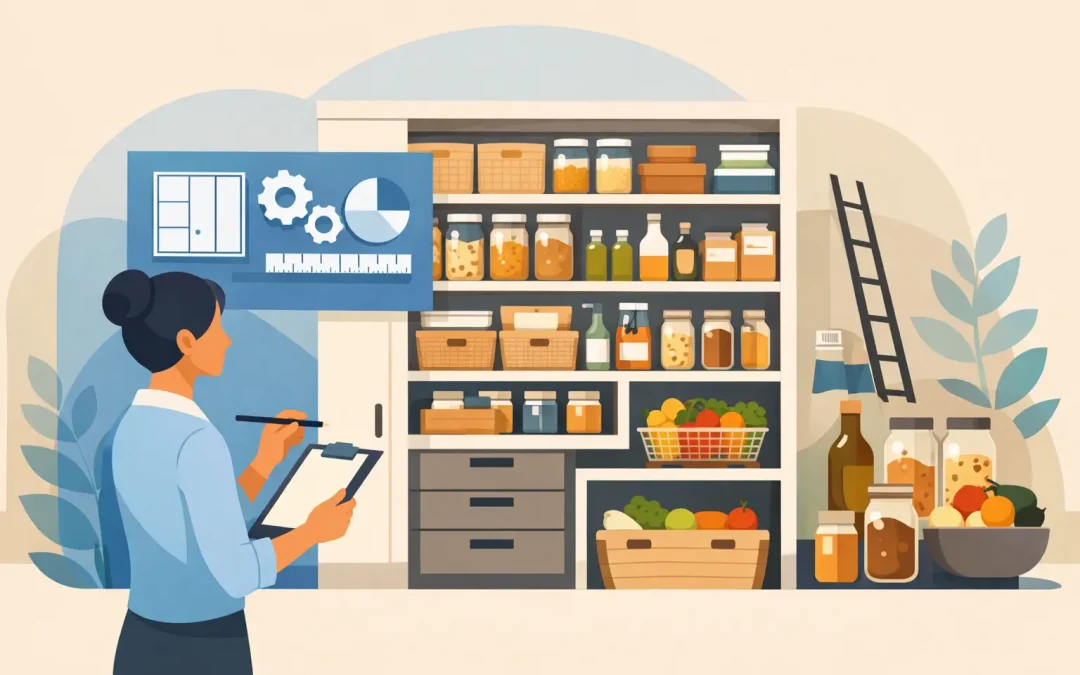
A pantry that looks neat on day one but frustrates you every week is usually a design problem, not a storage problem. If you are working out how to design pantry storage, the real goal is not simply fitting more in. It is creating a space that suits how your household shops, cooks and moves through the kitchen.
In many Melbourne homes, pantry storage has to do more than hold a few dry goods. It needs to handle bulk groceries, school lunch supplies, small appliances, servingware and the day-to-day overflow that can quickly clutter benchtops. That is why good pantry design starts with planning, not products.
How to design pantry storage around real use
The most effective pantry is built around habits. A family that does one large weekly shop needs a different layout from a couple who buys fresh food every few days. Likewise, a compact pantry in an older home will need a different approach from a full-height walk-in pantry in a new build.
Start by thinking about what actually needs to live there. Dry goods, cans, oils, baking items, snacks, pet food, appliances and cleaning items all have different storage needs. If everything is treated the same, shelves become crowded and hard to use. If each category has a clear place, the pantry becomes easier to maintain.
This is also where custom design has a clear advantage. Off-the-shelf storage can help, but it cannot change poor shelf depth, awkward door swings or wasted corners. A well-designed pantry works with the available space rather than asking you to work around it.
Choose the right pantry layout first
Before selecting shelves, drawers or fittings, decide which pantry format makes the most sense for the kitchen.
A tall cabinet pantry suits many Melbourne homes because it delivers strong storage capacity without needing a separate room. It works especially well in kitchen renovations where floor space is limited but ceiling height can be used. Internal drawers, adjustable shelving and door storage can make a tall pantry highly practical.
A walk-in pantry offers greater storage volume and can keep visual clutter out of the main kitchen. The trade-off is that it needs enough space to move comfortably, and it must be carefully planned so items do not disappear into deep shelves and dark corners. Bigger is not always better if access is poor.
A butler’s pantry can be ideal for households that entertain often or want extra bench space for appliances and food preparation. It adds flexibility, but only if the main kitchen and pantry work together. If the layout feels disconnected, you can end up walking back and forth more than necessary.
For smaller kitchens, a well-planned pantry cupboard may outperform a larger but less efficient setup. Good storage is about access, visibility and workflow as much as total volume.
Shelf depth and spacing matter more than most people expect
One of the most common pantry mistakes is making every shelf the same. It seems simple, but it rarely suits the range of items most households store.
Deep shelves can be useful for bulk goods and larger appliances, but they often create hidden rows of food at the back. Shallow shelves improve visibility and reduce waste because you can see what you have at a glance. For many dry goods, jars and tins, shallower shelving is more practical than oversized cavities.
Vertical spacing matters just as much. Tall cereal boxes, oil bottles and small appliances need more clearance than spice jars or packets. Adjustable shelving gives you flexibility, particularly if your storage needs change over time. Fixed shelving can look neat, but it is less forgiving.
If you are designing from scratch, it helps to create zones with different shelf heights rather than repeating one standard measurement throughout. That small adjustment can make the pantry feel far more usable.
Drawers often outperform shelves
When homeowners think about pantry storage, they often picture rows of shelves. Shelves do have their place, but drawers can be easier to access and easier to keep orderly.
Deep internal drawers are particularly useful in lower pantry sections where bending and reaching becomes frustrating. Instead of crouching to see what is pushed to the back, you can pull the drawer out and view the contents from above. This is practical for snacks, packets, baking supplies and even heavier items such as flour or rice.
Wire baskets are sometimes used as a budget option, but they are not always ideal for every kitchen. Small items can tip over, packaging can snag, and cleaning can be less straightforward. Solid drawers generally give a cleaner finish and better support, especially in a custom cabinetry setting.
The best result is often a combination – open or adjustable shelves up high, with drawers or pull-outs below. That balance keeps everyday items accessible without wasting vertical space.
Group items by frequency, not just category
A pantry should support the way the kitchen functions every day. That means storing frequently used items in the easiest-to-reach zones, while occasional items can sit higher or lower.
Breakfast foods, lunchbox items, tea, coffee and cooking staples usually deserve prime position. Entertaining platters, extra paper towel or seasonal baking supplies can go in less convenient areas. This seems obvious, but it is often overlooked when a pantry is designed to look symmetrical rather than work efficiently.
It also helps to think in task-based zones. For example, keeping baking ingredients together saves time. So does creating a snack area that children can access without pulling apart the rest of the pantry. Small changes like this reduce friction in a busy household.
If appliances such as a microwave, toaster or blender need to be housed in the pantry, allow proper clearance, power access and ventilation. Appliances should not be squeezed into a cupboard as an afterthought.
Don’t ignore doors, corners and vertical space
When pantry storage falls short, the issue is often not the main shelves but the areas left underused. Doors, corners and full-height cabinetry can all improve storage if handled properly.
Door storage works well for lighter items such as spices, wraps or small jars, but only if the door can carry the weight and the shelving does not interfere with internal storage. Overloading pantry doors can reduce durability over time, so this is one of those areas where careful design matters.
Corners can be useful or frustrating depending on the layout. In some kitchens, corner pantry solutions make sense. In others, a straight run of cabinetry with better internal fittings gives a cleaner and more functional result. It depends on the room and how much clear access you can achieve.
Vertical space is often underused in older kitchens. Full-height cabinetry can add substantial storage, but the uppermost areas should be reserved for less-used items. If everyday essentials are too high, convenience disappears quickly.
Good pantry design should suit the whole kitchen
The pantry should not be planned in isolation. It needs to work with the rest of the kitchen layout, including the fridge, cooking zone, sink and preparation areas.
If the pantry is too far from the main prep space, putting groceries away and cooking both become less efficient. If doors clash with walkways or appliances, the kitchen can feel awkward even if the storage capacity is generous. These are the details that make a custom design worthwhile.
Material selection also matters. Pantry cabinetry needs to be durable, easy to clean and consistent with the overall kitchen finish. A pantry is a hardworking part of the home, so practicality should lead the decision, with style supporting it.
For homeowners planning a broader renovation, this is also a good time to think about connected storage in laundries, bathrooms or other living areas. A kitchen works better when storage pressure is shared across the home rather than forced into one room.
How to design pantry storage for long-term value
A pantry should suit your household now, but it should also continue working in a few years’ time. Children grow, shopping habits change, and what feels like enough space today may not be enough later.
That is why flexibility is so valuable. Adjustable shelves, strong drawer runners, sensible zoning and quality cabinetry all help the pantry stay useful over time. Cheap inserts can provide a short-term fix, but they rarely solve an underlying layout issue.
For many homeowners, the best pantry is not the most elaborate one. It is the one that makes daily kitchen use easier, keeps benchtops clearer and gives every item a logical place. That outcome comes from thoughtful design, accurate cabinet sizing and a clear understanding of how the space will be used.
At All Quality Kitchens, that is the difference custom cabinetry can make. Instead of forcing your storage into a standard solution, the pantry can be designed around your kitchen, your routines and the way you want your home to function.
If you are planning a new kitchen or upgrading an existing one, pantry storage is worth getting right from the start. A well-designed pantry does not just hold more – it makes the whole kitchen feel calmer, more efficient and easier to live with every day.
Recent Comments