
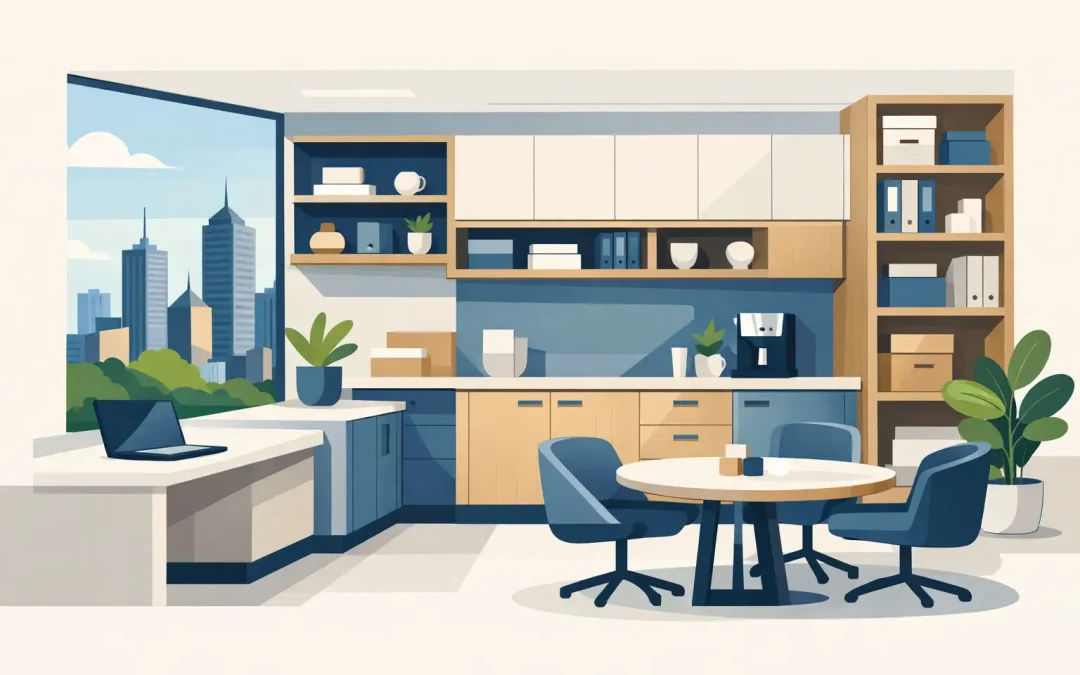
When an office starts to feel cluttered, cramped or harder to work in than it should, the cabinetry is often part of the problem. Good commercial office cabinetry Melbourne businesses invest in does more than fill a wall. It shapes how staff move, where equipment lives, how documents are stored and how professional the space feels the moment a client walks in.
For many Melbourne businesses, office cabinetry is not about making a space look fancy. It is about getting more use out of the floorplan, creating practical storage and fitting joinery around the way the team actually works. That is why custom cabinetry usually delivers a better result than standard office furniture. Off-the-shelf units can help in some settings, but they rarely make the most of awkward corners, shared work zones or reception areas that need a polished finish.
Why commercial office cabinetry in Melbourne needs a custom approach
No two office spaces work the same way. A medical consulting suite has very different storage needs to a creative studio, a small legal practice or a property management office. Even among similar businesses, the right cabinetry depends on how much paperwork is still kept on site, whether staff hot-desk, how often clients visit and what needs to be hidden versus displayed.
Custom office cabinetry gives you control over these details. You can build around printers, technology, filing systems, sample storage, staff kitchens and reception requirements rather than trying to force them into generic furniture. In older Melbourne buildings especially, walls may not be square, ceiling heights can vary and usable floor space may be tighter than expected. Bespoke joinery helps turn those constraints into a practical layout.
There is also the question of presentation. Office fit-outs need to look professional without becoming difficult to maintain. Cabinetry should support a clean and organised environment, but it also has to stand up to regular use. Doors, drawers, benchtops and finishes all need to suit a commercial setting, not just look good on installation day.
What to prioritise in commercial office cabinetry Melbourne projects
Storage capacity matters, but capacity alone is not enough. The best office cabinetry is planned around daily routines. If staff are constantly crossing the room to access supplies, opening awkward cupboards or stacking items on top of cabinets because the internal layout is wrong, the joinery is not doing its job.
A better approach is to think in zones. Reception cabinetry should support first impressions and day-to-day admin. Workstation storage should reduce desk clutter without limiting movement. Shared utility areas need easy access to consumables and equipment. Meeting rooms may benefit from integrated cupboards for screens, stationery or presentation material. Staff kitchen areas need cabinetry that is durable, easy to clean and consistent with the rest of the fit-out.
Durability should be considered early, not added as an afterthought. Commercial environments generally place more strain on cabinetry than a standard home setting. That does not always mean the heaviest possible materials are the right answer, but it does mean hardware, board selection and finishes need careful thought. Soft-close hardware, quality drawer runners and practical surface finishes usually pay off over time because they reduce wear and keep the office looking sharper for longer.
Reception, storage and staff areas all need different solutions
One of the most common mistakes in office fit-outs is treating all cabinetry as if it serves the same purpose. In reality, each area has its own demands.
Reception cabinetry needs to balance appearance and function. It often has to conceal cords, paperwork, devices and personal items while keeping the front desk neat and welcoming. It also has to give staff enough working space without making the entry feel blocked or oversized.
Back-of-house storage is more utilitarian, but it still needs planning. Tall cabinets, compactus-style storage zones, overhead cupboards and mixed shelving can all work well depending on what needs to be stored. The right combination depends on access frequency, item size and whether visibility is helpful or distracting.
Staff kitchens and breakout spaces sit somewhere in the middle. They need to feel comfortable and attractive, but they also need to cope with constant use. In these areas, practical layout matters just as much as finish selection. A good cabinet design can improve traffic flow, make cleaning easier and help the room stay tidy throughout the day.
The balance between style and practicality
Most businesses want an office that looks modern and well considered. That makes sense. Clients notice the environment, and staff do too. But office cabinetry should never be selected on appearance alone.
A minimalist finish may suit one workspace beautifully, while another needs warmer tones or harder-wearing surfaces to suit the brand and the level of use. Open shelving can create a lighter look, but it also shows clutter quickly. Handleless cabinetry can feel contemporary, though in some settings traditional handles are more practical and easier to maintain. Light colours can brighten a smaller office, but darker finishes may hide wear better in high-traffic zones.
This is where experience matters. The best result usually comes from matching the aesthetic to the daily demands of the business. A polished office is valuable, but a polished office that functions properly is what really improves the space.
Planning an office fit-out around the way your business works
Before any cabinetry is designed, it helps to be clear about what the office needs now and what it may need in the near future. A small team may be growing. A business that has reduced paper storage could need more room for technology or sample products instead. Some offices need privacy and concealed storage, while others benefit from more open and flexible joinery.
That is why consultation is such an important part of the process. Measurements matter, of course, but so do workflow, staff habits and the challenges in the current setup. Good cabinetry design solves specific problems. It may improve circulation, create more bench space, reduce visible clutter or make a multi-use room work harder.
For business owners and property decision-makers, this planning stage can also help avoid unnecessary spend. Not every office needs a full-scale fit-out. Sometimes a well-designed reception desk, upgraded storage wall and practical staff kitchen cabinetry can make a major difference without changing every part of the premises.
Why local design and manufacturing can make the process easier
With commercial joinery, communication counts. Delays, measurement issues and unclear expectations can affect the whole fit-out schedule. Working with an experienced local cabinetry specialist often makes the process more straightforward because the design, manufacturing and installation are handled with a clearer understanding of site conditions and client priorities.
For Melbourne businesses, local knowledge is useful for practical reasons too. Offices across the suburbs vary widely, from compact modern suites to older buildings with quirks that standard systems do not handle well. A custom joinery team with broad cabinetry experience can adapt more easily and recommend solutions that suit both the space and the budget.
This is also where a business like All Quality Kitchens can bring value beyond residential work. Custom cabinetry is custom cabinetry. The same care that goes into tailored kitchen and whole-of-home joinery applies to commercial spaces that need well-built storage, clean design and a personalised result.
Getting long-term value from commercial office cabinetry Melbourne businesses choose
The cheapest cabinetry option is not always the most economical. If the layout does not work, if the finish wears too quickly or if the storage is already inadequate six months later, the initial saving disappears fast.
Long-term value usually comes from a better fit. Cabinetry that uses the available space properly, suits the way your team works and is built from quality materials tends to perform better over time. It can help maintain a tidier environment, reduce frustration for staff and support a more professional presentation to clients and visitors.
There are always trade-offs. Some projects need to prioritise budget, others appearance, and others sheer storage volume. The key is knowing where to invest and where a simpler solution will do the job. A well-planned office fit-out should feel considered, not overbuilt.
If your current office feels harder to use than it should, cabinetry is worth a closer look. The right solution does not just fill empty walls. It helps create a workplace that is organised, practical and built around the way your business runs every day.
Recent Comments