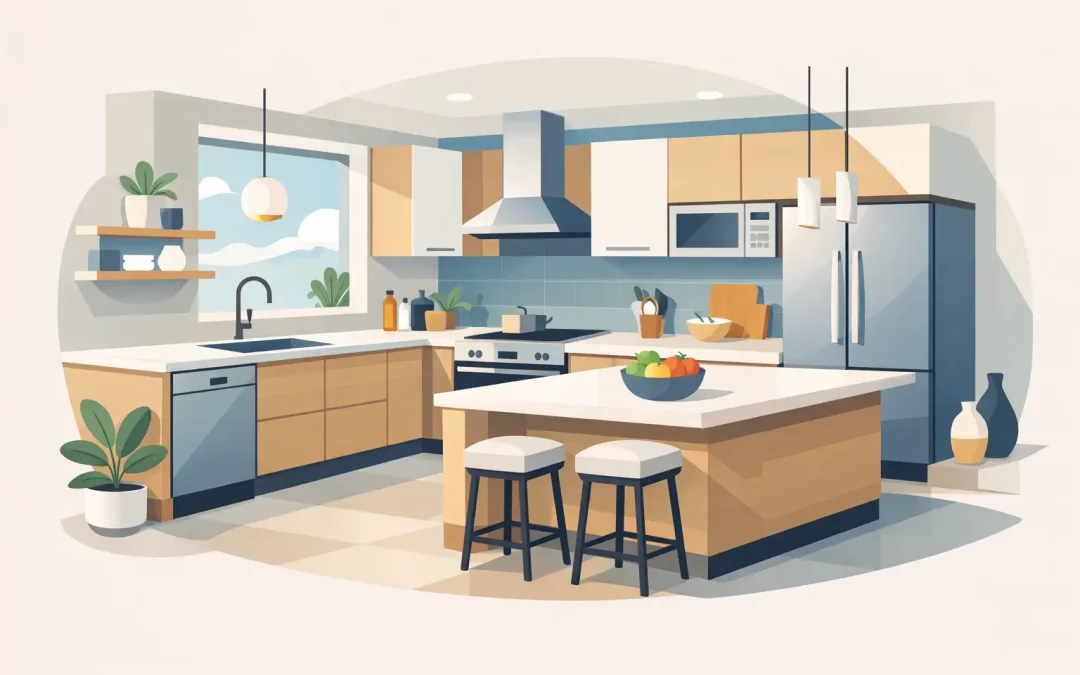
A good U-shaped kitchen renovation can fix problems that homeowners put up with for years – awkward corners, limited bench space, poor storage and a layout that feels cramped when more than one person is using it. When the design is handled properly, a U-shaped kitchen gives you strong workflow, generous preparation areas and cabinetry that makes better use of the room.
That is why this layout remains a popular choice across Melbourne homes, from compact units through to larger family houses. It suits modern living well, but only when it is planned around the way you actually cook, store and move through the space. A nice-looking kitchen is not enough if drawers clash, appliances are squeezed in or the room feels closed off.
Why a U-shaped kitchen renovation suits so many homes
The main strength of a U-shaped kitchen is simple – it wraps the working zone around you. Sink, cooktop and fridge can sit within easy reach, which makes day-to-day use more efficient. For busy households, that matters. You spend less time crossing the room and more time using the kitchen the way it was meant to be used.
This layout also creates plenty of bench space. That is a major advantage for families, keen home cooks and anyone who uses the kitchen for more than the basics. If you are preparing school lunches, cooking dinner while helping with homework, or entertaining on weekends, extra surface area makes the room easier to live with.
Storage is another reason homeowners choose this layout. Three walls of cabinetry can offer excellent capacity, but that does not mean every U-shaped kitchen automatically works well. Poorly planned corner cabinets, oversized appliances or shallow pantry space can waste a surprising amount of room. In a renovation, the difference is usually in the custom detailing.
Start with the room, not the trend
One of the biggest mistakes in kitchen renovation is forcing a layout into a room that does not suit it. A U-shaped kitchen works best when the proportions are right and there is enough clearance between opposing runs of cabinetry. If the gap is too tight, the kitchen feels boxed in. If it is too wide, the layout loses its efficiency.
That is why the room itself should lead the design. Ceiling height, window positions, adjoining living areas, natural light and entry points all matter. In some homes, a fully enclosed U-shape creates a practical workspace. In others, opening one side to a peninsula or connecting it more cleanly to the dining area produces a better result.
This is also where custom cabinetry earns its place. Off-the-shelf cabinet sizes can leave fillers, awkward dead zones and mismatched proportions. A tailored approach lets the layout fit the room properly, rather than asking the room to compromise around standard modules.
Getting the working triangle right
Most homeowners have heard of the kitchen work triangle, but the principle still holds up. The sink, cooktop and fridge should feel connected without being crowded together. In a U-shaped layout, this balance is often easier to achieve than in a galley or one-wall kitchen, but it still takes planning.
For example, placing the sink under a window may look ideal, yet that position might interrupt the best prep zone if the dishwasher and bin pull-out are not close by. Likewise, a cooktop centred for appearance can create pinch points if there is not enough landing space on either side. Good design is not about ticking boxes. It is about how the kitchen works on an ordinary Tuesday night.
Storage should be smarter, not just bigger
Many homeowners start a renovation asking for more cupboards. What they usually need is better storage design. Deep drawers often outperform standard base cabinets because they bring items forward and make access easier. Pantry storage needs to suit your shopping habits. Corner solutions should be selected carefully, because some add convenience while others take up room without delivering much value.
In a U-shaped kitchen, storage planning should also reflect how each zone is used. Pots and pans belong near the cooktop. Everyday crockery should be close to the dishwasher. Food storage needs to be convenient to both fridge and prep space. When cabinetry is designed around real use, the kitchen feels calmer and more organised from the first day.
Overhead cabinetry is another area where balance matters. Full-height wall cabinets can maximise storage, especially in smaller homes, but too much upper cabinetry can make a kitchen feel heavy. Open shelving may soften the look, though it offers less concealment and often demands more upkeep. It depends on the room, the household and how tidy you realistically want to be.
Materials matter in a high-use kitchen
A renovation should look good, but it also needs to handle daily wear. Benchtops, cabinet finishes, splashbacks and hardware all influence how the kitchen performs over time. Families with young children may want surfaces that are easier to clean and less likely to show marks. Households that cook often may prioritise durable benchtops and stronger drawer systems.
There is no single right finish for every project. Polyurethane, laminate, timber accents, engineered stone alternatives and textured cabinetry can all work well when selected for the right purpose. The key is to choose materials that suit both the style of the home and the practical demands of the kitchen.
Hardware is easy to overlook, but it affects the quality of daily use more than people expect. Soft-close drawers, reliable runners and well-made hinges are worth the investment because they are used constantly. A renovation should feel solid every time you open a cabinet, not just look polished on installation day.
Lighting can change the whole room
Even a well-designed U-shaped kitchen can feel flat if the lighting is poor. Because this layout often uses three walls, shadows can fall across benchtops if lighting is not planned carefully. General ceiling lights alone rarely do the job.
Task lighting under overhead cupboards helps make preparation areas more usable. Pendant lighting can define a peninsula or breakfast bar if one side of the U is open. Natural light should also be protected where possible, especially in kitchens that already feel enclosed.
A brighter kitchen is not only easier to work in. It often feels larger, cleaner and more inviting. That can make a real difference in older Melbourne homes where the original kitchen may have been dark and closed off.
Open plan or enclosed – it depends on how you live
A U-shaped kitchen renovation is often part of a bigger conversation about the home layout. Some owners want a kitchen that feels connected to the living area. Others prefer more separation, especially if they cook often and want the mess contained.
Neither approach is automatically better. Opening the kitchen can improve sightlines, natural light and social connection, but it may reduce wall space for cabinetry. Keeping the kitchen more enclosed can support storage and function, though it may feel less integrated with the rest of the home.
This is where experience matters. A renovation should respond to the property and the people using it, not just follow the current style. In many projects, the best solution sits somewhere in the middle – open enough to feel welcoming, structured enough to remain practical.
The value of custom cabinetry in a U-shaped layout
U-shaped kitchens ask a lot of cabinetry. Corners need to work. Appliance housing must be precise. Storage has to be accessible. The finish needs to feel consistent across three connected runs. That is difficult to achieve when the project relies too heavily on standard sizing.
Custom joinery gives you more control over proportions, functionality and appearance. It allows awkward spaces to be used properly and helps create a kitchen that feels built for the house, not inserted into it. That becomes even more valuable when the renovation extends into adjoining areas such as the laundry, pantry or living room storage.
For homeowners wanting a cohesive result, this broader approach often makes sense. A kitchen rarely exists on its own. The cabinetry decisions made in one room can improve how the rest of the home functions as well.
With more than 20 years of experience, All Quality Kitchens understands that a successful renovation is not only about new doors and benchtops. It is about building a kitchen that suits the way you live now, while adding lasting value to your home.
What to get right before work begins
Before final plans are approved, it is worth being clear on a few practical points. Think about how many people use the kitchen at once, what appliances you want to keep or upgrade, and whether your storage needs have changed over time. Be honest about what frustrates you in the current kitchen. Those frustrations should shape the renovation.
It also helps to think beyond appearance. A beautiful layout can still disappoint if power points are in the wrong spot, bin storage is awkward or the pantry is too shallow for everyday use. The best outcomes come from careful planning early, not from trying to solve everything once installation starts.
A well-executed U-shaped kitchen can feel generous, efficient and tailored to the home. When the layout, cabinetry and finishes are considered together, the result is a kitchen that works hard every day without feeling overdesigned. If you are planning a renovation, aim for a space that makes life easier the moment you step into it.
Recent Comments