A kitchen can look good in a showroom and still be the wrong choice for your home. That is usually where the custom cabinets vs flatpack decision becomes clearer. Once you factor in room size, storage needs, daily use and how long you plan to stay in the property, the cheapest starting price is not always the best value.
For many Melbourne homeowners, this choice is less about trend and more about practicality. You want cabinetry that suits the way your household lives, fits the room properly and holds up over time. That is why it helps to look past the packaging and compare both options on what actually matters once the renovation is finished.
Custom cabinets vs flatpack: the core difference
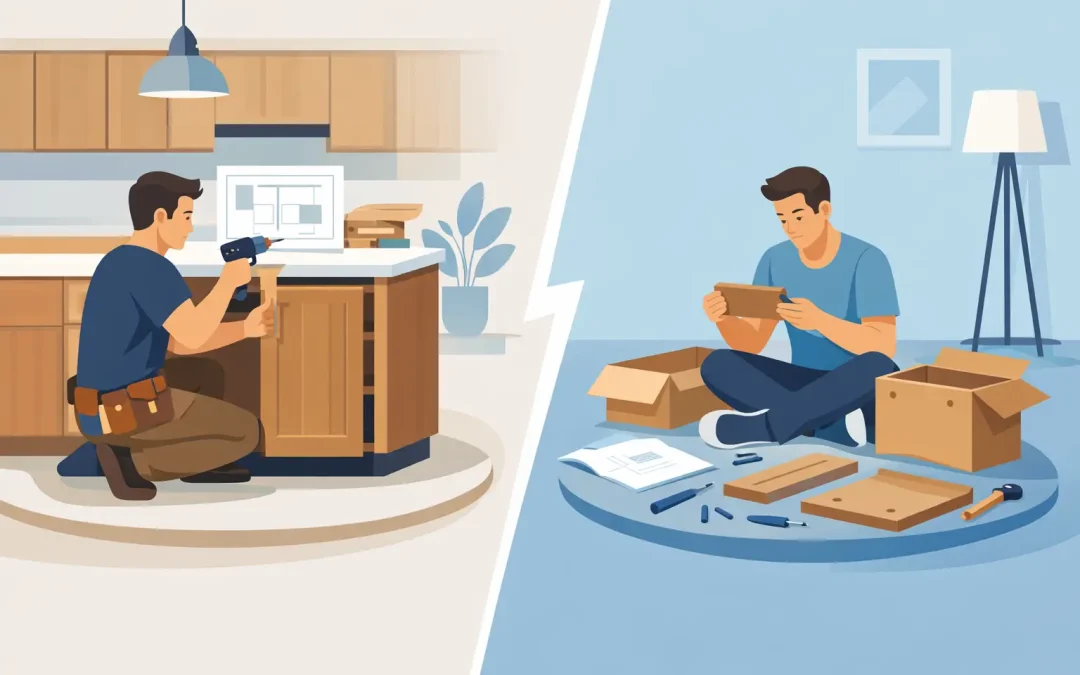
Flatpack cabinets are mass-produced units supplied in standard sizes, usually designed for quick ordering and assembly. They can be a workable option for simple layouts, tight budgets or short-term updates where flexibility is not a priority.
Custom cabinets are designed and built for the specific room. That means dimensions, finishes, internal storage, appliance integration and overall layout are tailored to the home rather than forced into a standard module. In a kitchen, laundry, bathroom or wardrobe, that difference is often felt every day in how the space functions.
The key point is not that one option is always right and the other is always wrong. It depends on the room, the budget and the result you want. But if you are renovating to improve long-term liveability and presentation, custom work generally gives you more control and a better fit.
Fit and layout matter more than most people expect
Very few homes are perfectly suited to standard cabinet sizes. Walls can be out of square, ceiling heights vary, services sit in awkward places and older homes often come with dimensions that do not match off-the-shelf systems neatly.
With flatpack cabinetry, compromises are common. You may end up with filler panels in visible areas, unused gaps, reduced storage or an appliance position that is workable rather than ideal. In a small kitchen, those compromises can have a real impact. A few centimetres lost here and there can mean less bench space, harder movement through the room or storage that never quite does the job.
Custom cabinetry is built around the room as it actually exists. That allows for better use of corners, wall-to-wall runs, floor-to-ceiling storage and cleaner integration of appliances. It also helps create a more balanced look, particularly in open-plan homes where the kitchen is on display from the living and dining areas.
For homeowners renovating more than one room, custom joinery also makes it easier to achieve consistency. The same design language, finishes and practical thinking can carry through the kitchen, laundry, bathroom and wardrobes without the result feeling pieced together.
Cost is not just the ticket price
Flatpack usually wins on upfront cost. If you are comparing the base price of standard cabinets, there is no surprise there. For a budget-conscious renovation, that lower entry point can be appealing.
But the real cost question is broader than the initial purchase. You also need to consider assembly, installation, modifications, extra panels, benchtop adjustments and how well the cabinetry will perform over time. A flatpack kitchen that needs multiple workarounds can become less economical than it first appears.
Custom cabinetry costs more because it includes design input, made-to-measure manufacturing, tailored detailing and a more precise installation outcome. You are paying for a finished solution rather than a standard product.
That does not mean every home needs the highest-end custom option. Sometimes a simple room with straightforward dimensions can suit a more basic approach. But when the layout is complex, storage is important or you want a renovation that adds genuine value to the property, custom cabinetry often justifies the investment.
Quality shows up in daily use
Cabinetry is one of those parts of the home that gets tested constantly. Doors open and close all day. Drawers carry weight. Moisture, heat and cleaning products all take their toll. So quality is not only about how cabinets look on day one. It is about how they perform after years of regular use.
Flatpack quality varies widely. Some products are serviceable, while others are built to meet a price point above all else. Materials, hardware and finishes can be more limited, and that can affect durability. You may notice it in drawer runners, hinges, edging, panel strength or the way moisture-prone areas wear.
Custom cabinets are generally built with closer attention to materials, construction and intended use. If a family kitchen needs tougher finishes, deeper drawers, better pantry access or storage planned around specific appliances, those details can be built in from the start.
That is where experience matters. A well-designed custom cabinet is not only made to fit the room. It is made to suit how the room will be used.
Storage is where custom design earns its keep
Most people do not renovate because they want different cupboards. They renovate because the space is not working. There is never enough pantry room, the corner cabinet is awkward, the bins are in the way, or the small appliances take over the bench.
Flatpack systems can offer decent storage, but they are limited by standard widths and preset configurations. If your needs line up with those modules, fine. If they do not, you are left adapting your routine to suit the cabinetry.
Custom cabinetry works the other way around. Storage can be planned for the household, whether that means wider pot drawers, integrated bins, overhead cupboards to the ceiling, a concealed appliance nook or practical cabinetry in adjoining spaces. In laundries and bathrooms especially, that tailored approach can make compact rooms far more functional.
This is often the point where homeowners see the difference most clearly. A room that is designed around real habits tends to stay neater, work better and feel easier to use.
Style and resale value
Appearance is not everything, but it matters. Cabinetry takes up a large visual footprint, especially in the kitchen. If the finish, proportions and layout feel generic or forced into the room, the whole renovation can fall flat.
Flatpack ranges usually offer a set menu of colours, profiles and sizes. That can be enough for a simple update, particularly in an investment property or a lower-cost refresh. But if you are aiming for a more considered result, the options can feel restrictive.
Custom cabinetry gives you more control over the final look. That includes door profiles, finishes, colours, handles, internal configurations and the way the cabinetry works with your benchtops, splashback and flooring. It also supports a more integrated, built-in finish that tends to present better in owner-occupied homes.
From a resale point of view, buyers often respond to quality they can see and use. A kitchen that feels thoughtfully planned and well built can strengthen the overall impression of the home. It is not only about luxury. It is about fit, finish and functionality.
When flatpack can still make sense
There are cases where flatpack is a reasonable choice. If you are updating a property on a tight budget, working on a temporary solution or renovating a very simple room, standard cabinetry may do the job.
It can also suit projects where speed and basic functionality are the main priority. Not every room needs a highly tailored design. The important thing is being realistic about the result. Flatpack can be practical, but it usually asks you to accept some compromises in fit, storage flexibility and finish.
If you are comfortable with those trade-offs, it may be suitable. If not, that is usually a sign custom is the better path.
When custom cabinets are worth it
Custom cabinets are usually the stronger option when the room has unusual dimensions, the storage needs are specific or the cabinetry is central to how the home functions. They also make sense when you want a cohesive result across multiple rooms, or when quality and longevity are a priority.
For many households, the kitchen is not a room you renovate twice. It needs to work now and still work years from now. That is why a tailored approach often gives greater confidence. Instead of adjusting your expectations to fit a standard product, the cabinetry is built to suit your space, your style and your day-to-day needs.
At All Quality Kitchens, that is the value of custom joinery done properly. It is not about making things more complicated. It is about delivering cabinetry that fits, performs and feels right in the home.
If you are weighing up custom cabinets vs flatpack, the best decision usually comes from being honest about what you want the renovation to achieve. If you only need a quick update, flatpack may be enough. If you want lasting quality, better use of space and a result that feels made for your home, custom cabinetry is hard to beat.
The right cabinetry should make daily life easier, not ask you to work around it.
Recent Comments