
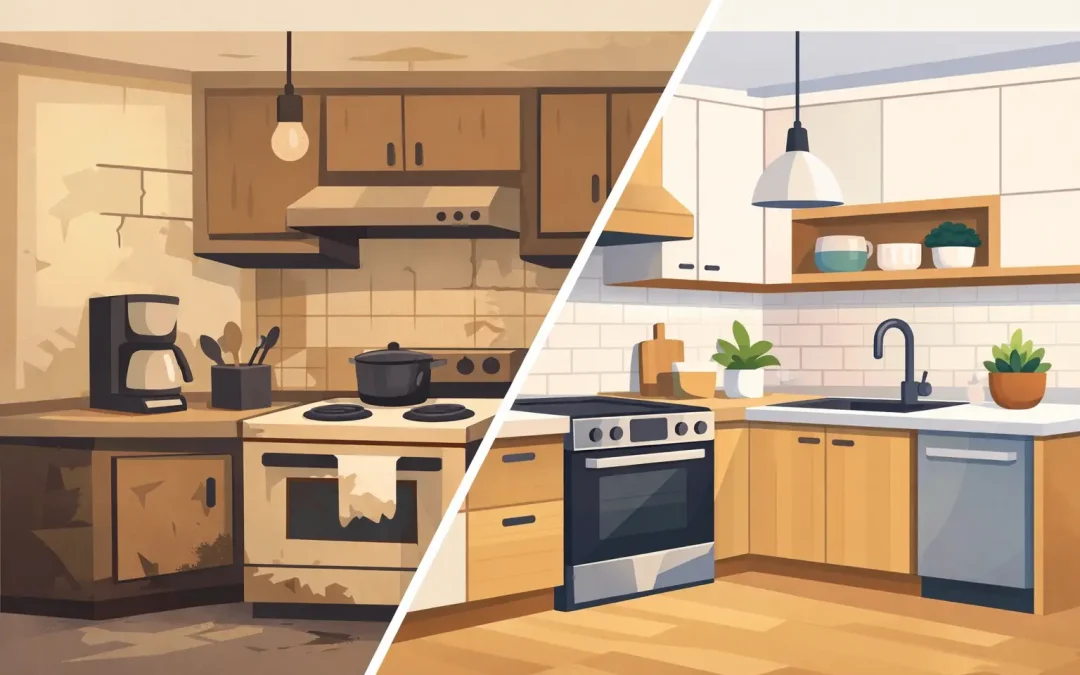
A tired kitchen usually shows its age in the same places – cramped storage, awkward bench space, poor lighting and finishes that no longer suit the rest of the home. That is why a kitchen makeover before and after is about much more than appearance. When the design is right, the room feels easier to use every day, whether you are cooking for the family, packing lunches or hosting friends on the weekend.
In many Melbourne homes, the biggest difference is not one dramatic feature. It is the way several practical improvements work together. Better cabinetry, smarter appliance placement, cleaner lines and a layout that suits the household can completely change how the kitchen performs.
What really changes in a kitchen makeover before and after
The most successful renovations solve problems that homeowners have simply learned to live with. You might have drawers that do not open properly, overhead cupboards that are hard to reach, or a fridge positioned where it interrupts movement through the room. These issues can seem minor on their own, but together they make the kitchen feel frustrating.
After a well-planned makeover, the space usually feels calmer and more organised. Storage is built around what you actually use. Benchtops become more usable because appliances are better integrated. Traffic flow improves, which matters in busy households where more than one person is often in the kitchen at once.
There is also a visual shift. Older kitchens often feel heavy because of bulky cabinetry, dated colours or mismatched finishes. A custom renovation can bring consistency to the space, with materials, colours and fittings chosen to suit the style of the home rather than fight against it.
Before: the common signs a kitchen is no longer working
Most homeowners start thinking seriously about renovation when the kitchen becomes inconvenient, not just unfashionable. Lack of storage is one of the most common complaints. Standard cabinetry often leaves wasted gaps, while older layouts rarely account for the amount of cookware, pantry items and small appliances a modern family needs.
Lighting is another issue that is often overlooked until the renovation is complete. A kitchen can have plenty of natural light during the day and still feel dim at night if task lighting has not been considered properly. Shadows over benches, dark corners and poor visibility inside cupboards all affect how the room feels.
Then there is the layout itself. In some homes, the kitchen was designed around appliances and habits from decades ago. Ovens may sit too low or too high, sinks may be poorly positioned, and there may be little connection between preparation, cooking and cleaning zones. The result is a kitchen that looks crowded yet still lacks function.
Wear and tear also matters. Swollen cabinet doors, chipped laminate, outdated splashbacks and ageing hardware can make the whole room feel tired. Even if the structure is sound, these details influence how the space is used and how the rest of the home is perceived.
After: what a good transformation should deliver
A strong kitchen renovation should make daily tasks easier straight away. That could mean deep drawers for pots instead of hard-to-reach cupboards, a pantry designed around your shopping habits, or a better balance between open bench space and storage. The point is not to add features for the sake of it. The point is to create a kitchen that fits the way you live.
The visual improvement should also feel lasting, not trend-driven. Clean cabinetry lines, durable finishes and a considered palette usually age better than highly specific design choices that may date quickly. Modern kitchens work best when they feel fresh but still connected to the rest of the property.
For many households, the after effect is also about confidence. You stop working around the room’s limitations. You know where everything goes. Cleaning becomes simpler. The kitchen becomes a place you want to spend time in, rather than a room you are constantly trying to manage.
Why custom cabinetry makes the biggest difference
Cabinetry has one of the strongest impacts in any kitchen makeover before and after comparison because it affects both appearance and usability. Off-the-shelf products can suit some situations, but they often leave compromises in homes with unusual dimensions, older floorplans or specific storage needs.
Custom cabinetry allows the kitchen to be built around the room rather than forcing the room to suit standard sizes. That matters in Melbourne homes where layouts can vary widely, from compact units through to larger family homes and renovated period properties. A tailored approach can improve corner storage, integrate appliances more neatly and make better use of height, width and depth.
It also creates a more cohesive result. Cabinet door profiles, internal storage, finishes and hardware can be selected to suit the household’s priorities. Some clients want a minimalist modern kitchen with clean surfaces and hidden storage. Others need a family-focused layout with strong practicality and easy access. Both can look polished, but the right solution depends on how the kitchen is used.
The design choices that shape the before and after result
Layout usually matters more than colour. A beautiful finish cannot fix a kitchen that is awkward to move through. If the room feels tight, it may benefit from reworking the work zones, reshaping the island or peninsula, or adjusting the placement of appliances and cabinetry. Sometimes small changes create the biggest gains.
Storage design is equally important. Tall pantry units, drawer systems, integrated bins and overhead cabinetry can all improve function, but it depends on the available space and the household’s routine. A growing family will use the kitchen differently from a couple downsizing, and a property prepared for resale may need broader design appeal.
Materials also influence the final result. Cabinet finishes, benchtops and splashbacks should look good together, but they also need to suit the level of use the kitchen will get. A high-traffic family kitchen needs hard-wearing surfaces that are easy to maintain. A statement finish may look impressive at first, but if it marks easily or is difficult to clean, it can become a frustration.
Lighting, too, deserves attention early in the process. Under-cabinet lighting, pendant placement and general illumination all shape the room. Good lighting makes colours read correctly, improves safety and helps the space feel more inviting at all hours.
Budget, value and the trade-offs to consider
Not every renovation needs a full structural overhaul. In some kitchens, the best results come from replacing cabinetry and finishes while keeping plumbing and major appliance locations largely the same. In others, the layout is the main problem, and changing it is worth the extra investment.
This is where experience matters. It is easy to spend money in the wrong areas if decisions are driven only by visual inspiration. A quality renovation balances appearance, function and budget. You may decide to prioritise custom storage over premium surface upgrades, or choose durable, practical materials that give better long-term value for a busy home.
There is also the question of future use. If this is your long-term home, it makes sense to design around your habits and preferences. If you are renovating with resale in mind, the ideal approach may be more neutral while still delivering obvious quality. Neither option is automatically right. It depends on your goals.
A renovation should fit the whole home
The best before and after kitchens do not feel isolated from the rest of the property. They connect visually and practically with adjoining living areas, laundries, bathrooms and storage zones. That is especially important in open-plan homes, where the kitchen is visible from multiple angles and used as part of everyday family life.
A cohesive approach to cabinetry can make a major difference here. When materials, finishes and storage thinking flow across the home, the result feels more considered and more valuable. For homeowners planning broader upgrades, working with a team that understands custom joinery beyond the kitchen can help create a better long-term outcome.
At All Quality Kitchens, that practical understanding is central to how tailored renovations are approached – not as isolated installations, but as part of a home that needs to work well day after day.
What homeowners should expect from the process
A quality kitchen makeover starts with listening. Before discussing finishes or colours, the real issues need to be clear. How do you use the kitchen now? What frustrates you? What do you need more of – storage, bench space, better flow, easier cleaning, a stronger visual finish? These answers shape the project far more than trends do.
From there, the focus should stay on fit, function and finish. Good design is not about making every kitchen look the same. It is about creating something that suits the room, the household and the standard of quality you expect.
If you are thinking about your own kitchen makeover before and after, the most useful place to start is not with a colour sample or a tap style. It is with an honest look at how your current kitchen falls short, because that is where the best transformation begins.
Recent Comments